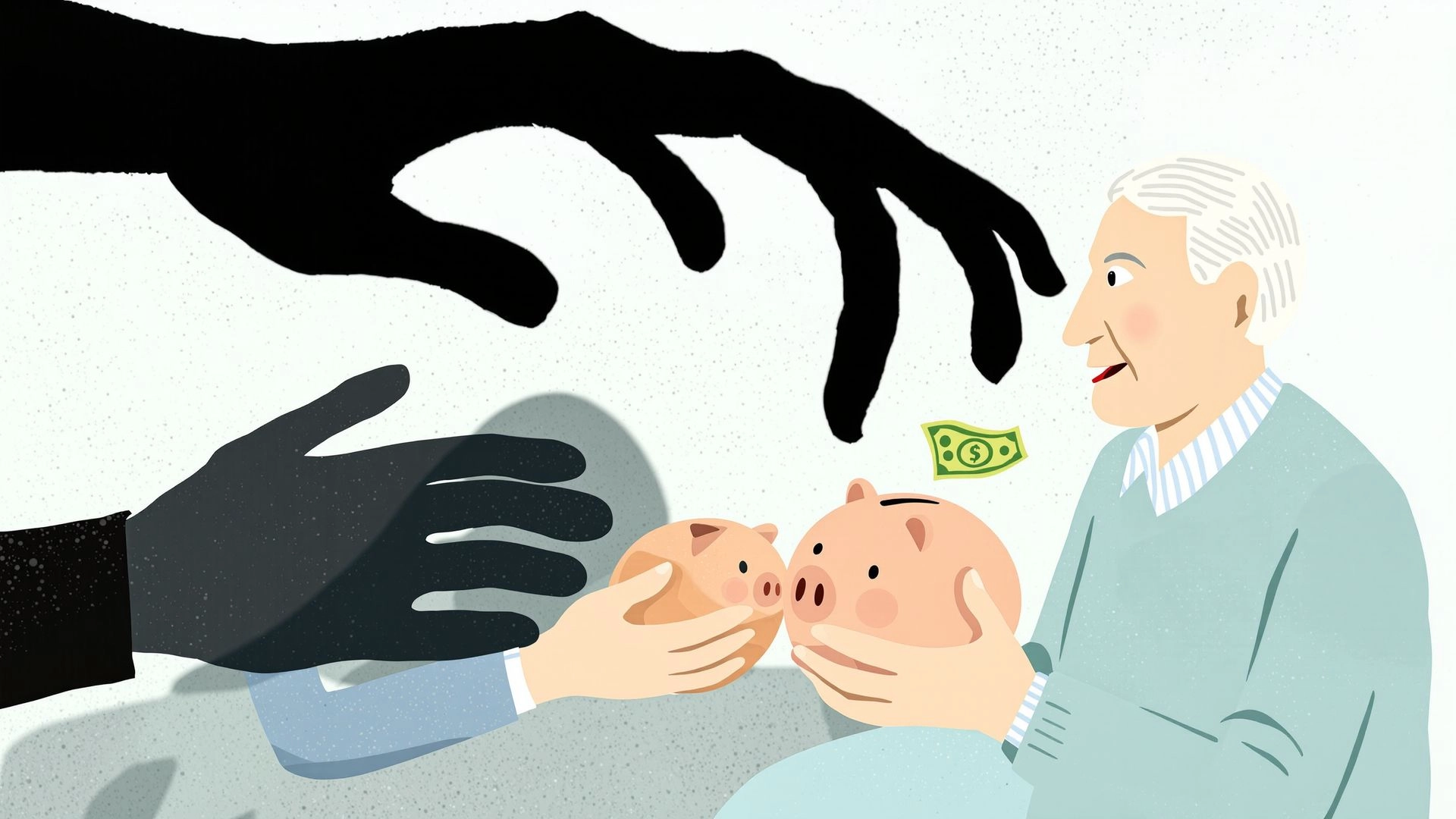
Protecting Seniors from Financial Abuse: Signs, Risks, and What to Do Now
Financial abuse of older adults often hides in plain sight. Changes in memory, judgment, and risk tolerance can make managing money harder with age. Unscrupulous people—including scammers, unethical advisors, and even family caregivers—may take advantage of that vulnerability.
Key facts at a glance:
Many older adults experience some cognitive decline, which can affect financial decisions.
About 1 in 5 Americans over 65 report being victims of financial swindles.
Abuse is not only from strangers—family caregivers and trusted contacts can also be involved.
What Is Elder Financial Abuse?
Elder financial abuse happens when someone illegally or improperly uses an older adult’s money, property, or assets. It includes scams, theft, coercion, misuse of legal authority, and unsuitable investment recommendations made for personal gain.
Why Older Adults Are Targeted
Changes in the brain may reduce risk aversion, making “too good to be true” offers seem appealing.
Confusion about bills, investments, or online accounts creates openings for others to take control.
Trust in caregivers, family, or advisors can be exploited.
Common Scams That Target Seniors
Imposter scams: “Grandchild in trouble,” IRS, Medicare, or utility company calls.
Lottery and prize scams: “You won—just pay the fee.”
Tech support scams: Fake pop-ups or calls claiming your computer has a virus.
Romance scams: Online connections that ask for money.
Charity scams: Fake disaster relief or veterans’ charities.
Medical equipment and benefits scams: Fraud involving durable medical equipment or services.
When Abuse Comes From Trusted People
Family or caregiver financial exploitation
Stealing cash, valuables, or benefits.
Coercing changes to wills, deeds, or beneficiary designations.
Misusing joint accounts or “borrowing” without repayment.
Power of attorney (POA) or guardianship misuse
Using authority to transfer assets for personal gain.
Limiting access to the older adult to hide wrongdoing.
Unethical financial advice
Pushing high-commission products that are unsuitable.
Churning accounts or selling complex annuities that lock up money.
Red Flags to Watch For
The caregiver refuses to share financial information or isolates the older adult.
Unpaid bills, shut-off notices, or sudden bank overdrafts.
Sudden changes in banking patterns or large cash withdrawals.
New “friends,” advisors, or relatives who take control of finances.
The older adult appears confused, fearful, or coached when discussing money.
Changes to wills, titles, or beneficiaries that don’t make sense.
Existence of a POA or guardianship with limited oversight.
Missing personal property.
The older adult does not know basic details about their own finances.
Protect Yourself or a Loved One: A Simple Checklist
Talk openly about money. Choose one trusted contact to help if needed.
Use account protections
Set up account alerts and transaction limits with your bank.
Avoid joint accounts; consider “view-only” access for helpers.
Enable two-factor authentication on all financial and email accounts.
Freeze credit reports to prevent new accounts (Equifax, Experian, TransUnion).
Strengthen legal safeguards
Use a narrowly tailored, springing durable power of attorney with clear duties.
Consider co-agents or require two signatures for large transactions.
Review estate documents yearly or after major life changes.
Work with trustworthy professionals
Choose a fee-only, fiduciary financial planner (CFP, AFC, CPA/PFS).
Ask advisors to document why an investment is suitable for your age, goals, and risk.
Ask for the advisor’s fiduciary duty in writing.
Keep good records
Save statements, receipts, and a simple money log.
Schedule a quarterly “money review” with a trusted family member or advocate.
Reduce risk from scams
Don’t answer unknown calls; let voicemail screen them.
Hang up on pressure. Real agencies do not demand gift cards or wire transfers.
Use call blocking and spam filters on phones and email.
What To Do If You Suspect Abuse
Immediate steps
Ensure safety first. If danger is immediate, call 911.
Document everything. Save voicemails, emails, statements, and names.
Contact the bank’s fraud department to freeze suspicious transactions.
Change passwords and set up two-factor authentication.
Place a credit freeze and review credit reports.
Report it
Adult Protective Services (APS): Find your state office via eldercare.acl.gov or call 1-800-677-1116.
National Elder Fraud Hotline: 1-833-372-8311 (Mon–Fri).
Federal Trade Commission (FTC): reportfraud.ftc.gov
FBI Internet Crime Complaint Center (IC3): ic3.gov
Long-Term Care Ombudsman (for nursing homes/assisted living): eldercare.acl.gov
Get legal and financial help
Contact an elder law attorney (search the National Academy of Elder Law Attorneys).
Consult a fiduciary financial advisor for a portfolio and risk review.
Ask a tax professional to help track and document losses.
For Family Caregivers and Professionals: Do the Right Thing
Be transparent: Share statements, budgets, and receipts.
Keep personal and client/family funds separate—no commingling.
Follow written care plans and legal documents exactly.
Avoid conflicts of interest and get consent for all major decisions.
Know mandatory reporting requirements in your state.
FAQs
What if the person won’t report the abuse?
Support them. Offer to report on their behalf. Reassure them about confidentiality and safety planning. APS can take anonymous reports in many states.
Are gifts to family considered abuse?
Gifts can be normal, but watch for pressure, unusual amounts, or sudden changes. Document intent. If in doubt, consult an attorney.
Is a joint bank account a good idea?
It can increase risk. Consider view-only access, bill-pay permissions, or a limited POA instead.
Can a power of attorney spend money freely?
No. An agent must act in the older adult’s best interest, keep records, and avoid self-dealing. Misuse can be a crime.
What if the suspected abuser lives with the older adult?
Prioritize safety. Involve APS, create a plan with a social worker, and consider respite care or alternative housing if needed.