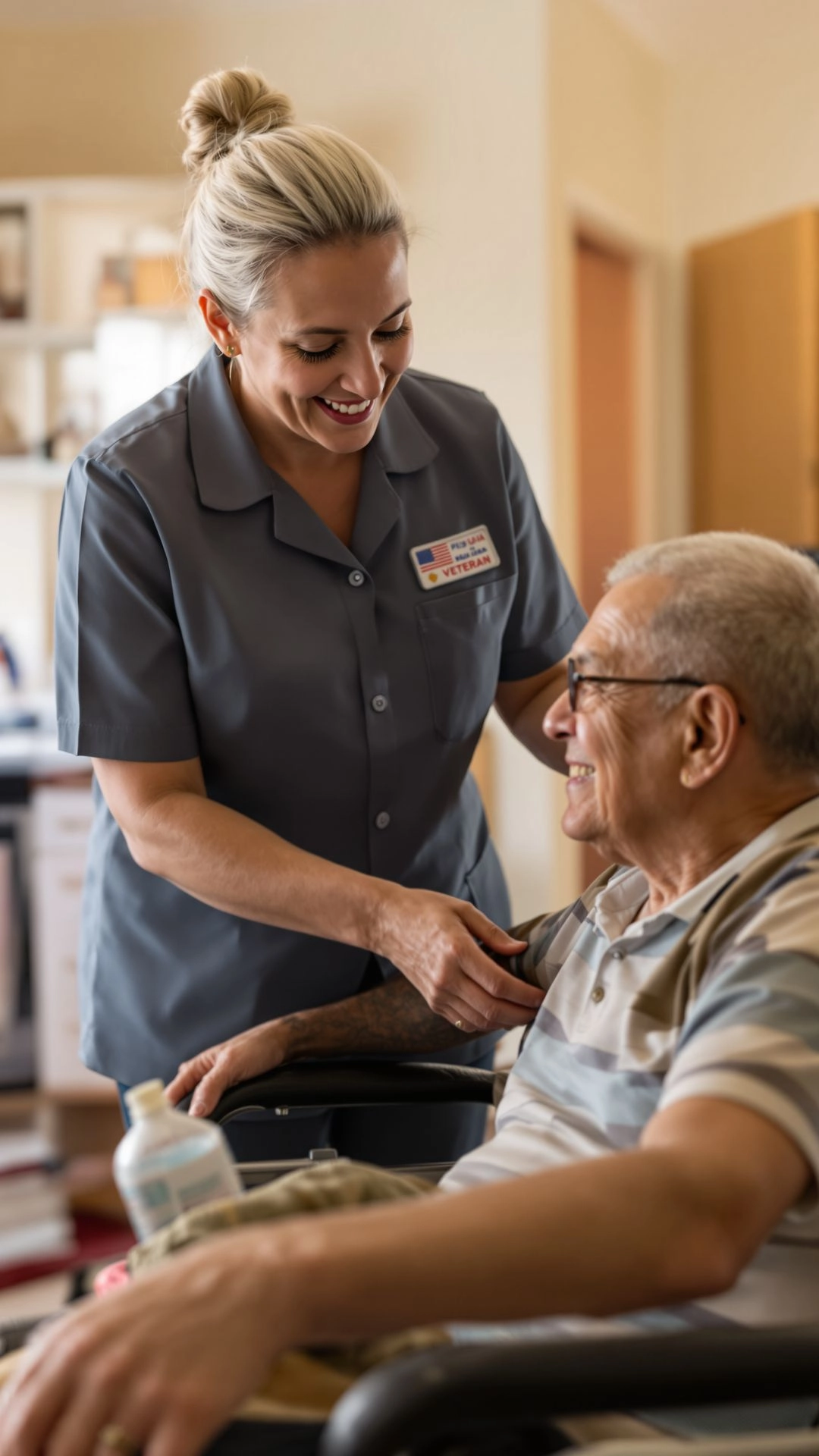
A family caregiver helping a veteran at home, representing support, training, and stipend benefits through the Veterans Family Caregiver Program

Paying Family Caregivers through the Veterans Family Caregiver Program (PCAFC)

The Program of Comprehensive Assistance for Family Caregivers (PCAFC) helps eligible Veterans and their family caregivers with monthly, tax-free stipends, training, support services, and certain travel and health benefits. A spouse, adult child, parent, stepfamily, extended family member, or someone who lives with the Veteran can be the caregiver.
A veteran being assisted at home by a family caregiver, demonstrating support with daily activities such as bathing, dressing, and mobility, highlighting eligibility for VA caregiver support.

Who Is Eligible

Veteran eligibility (all must be true):

  • Service-connected disability rating of 70% or higher (single or combined)
  • In need of in-person personal care services for at least 6 continuous months due to:
    • Inability to perform at least one Activity of Daily Living (ADL), such as bathing, dressing, toileting, feeding, mobility, or
    • A continuous need for supervision, protection, or instruction
  • Injury or serious illness incurred or aggravated in the line of duty. PCAFC applies to qualifying Veterans from all eras. Eligibility rules can change; confirm the latest criteria with VA.

Caregiver eligibility:

  • Age 18 or older
  • Spouse, son, daughter, parent, stepfamily, extended family, or someone who lives with the Veteran (or will upon designation)
  • Able to complete VA caregiver education and training
  • Able to perform the Veteran’s personal care needs

What You Receive Through PCAFC

For caregivers:

  • Monthly, tax-free stipend based on local GS-4, Step 1 pay rates
    • Level 1: 62.5% of the monthly rate
    • Level 2: 100% of the monthly rate if the Veteran is unable to self-sustain in the community (needs 3+ ADLs each time or continuous supervision/protection/instruction)
  • Training, coaching, and ongoing support
  • Health insurance for caregivers through CHAMPVA, if otherwise uninsured and eligible
  • Beneficiary travel reimbursement for approved visits, if eligible

For Veterans:

  • A dedicated VA Caregiver Support Team
  • Access to adaptive equipment at no cost (e.g., wheelchairs, ramps)
  • Referrals to prosthetics and physical therapy for mobility solutions
  • Guidance to related benefits that can significantly increase independence and quality of life

Related VA Benefits Often Linked to Caregiver Enrollment

Many families discover additional benefits during the PCAFC process:
  • Special Monthly Compensation (SMC): May increase if new evidence shows higher-level needs
  • Specially Adapted Housing (SAH) Grant: Funds major home modifications for accessibility
  • Home Improvements and Structural Alterations (HISA) Grant: Funds needed home adjustments
  • Automobile Allowance and Adaptive Equipment: Helps pay for a vehicle and mobility modifications

Real-Life Case Example (summary)

“Jim” was 100% service-connected and needed aid and attendance. After his wife completed PCAFC training and he enrolled:
  • His SMC increased to a higher level based on further assessment, significantly raising his monthly compensation
  • His wife received the higher-level, tax-free caregiver stipend
  • He received a power wheelchair and home ramps at no cost
  • He was conditionally approved for an SAH grant for home renovations
  • He received an automobile allowance from VBA and adaptive equipment funding from VHA, reducing the out-of-pocket cost of a mobility-modified van
Note: Amounts and rates change annually. Your results will depend on your VA rating, local pay rates, and clinical assessments.

How to Apply: Step-by-Step

Confirm VA Health Care enrollment

  • The Veteran must be enrolled in VA health care. If not, apply at va.gov/health-care.

Submit VA Form 10-10CG

  • Application for the Program of Comprehensive Assistance for Family Caregivers
  • Include the designated Primary Family Caregiver (and up to two Secondary Family Caregivers if desired)
  • Form and details: va.gov/find-forms/about-form-10-10cg

Complete assessments and training

  • VA Caregiver Support team will conduct clinical assessments (in-home, virtual, or clinic)
  • Primary Family Caregiver completes required training
  • The Caregiver may need to register as a vendor to receive stipend payments

Receive your stipend decision

  • Level 1 or Level 2 is based on the Veteran’s care needs
  • Payments are tax-free and reflect your local GS-4 Step 1 pay rate

Ask about related benefits

  • SAH Grant (VA Form 26-4555): va.gov/housing-assistance/disability-housing-grants
  • HISA Grant: prosthetics.va.gov/psas/HISA2.asp
  • Automobile Allowance (VA Form 21-4502): va.gov/disability/eligibility/special-claims/automobile-allowance
  • Prosthetics and Physical Therapy referrals for equipment and home access
A veteran and caregiver sitting at a desk, filling out VA forms together, representing the step-by-step application process for the Program of Comprehensive Assistance for Family Caregivers.

What Counts as an ADL

  • Bathing
  • Dressing/undressing
  • Grooming to remain clean and presentable
  • Toileting
  • Feeding (including issues with swallowing or non-oral nutrition)
  • Mobility (walking, stairs, transferring from bed/chair)
  • Adjusting special prosthetic/orthopedic appliances as required due to disability

Caregiver Stipend Examples (for illustration)

If local GS-4 Step 1 annual pay is $36,000:
  • Monthly base: 36,000÷12=3,000
  • Level 1 stipend: 62.5% of 3,000=1,875 per month
  • Level 2 stipend: 100% of 3,000=3,000 per month Your actual rate depends on your local GS table and VA determination.

Required Documents and Helpful Links

Frequently Asked Questions

Can a spouse be paid as the caregiver?
Yes. Spouses and other family members often serve as the paid Primary Family Caregiver.
Is the stipend taxable?
No. PCAFC stipends are not treated as taxable income.
What if the Veteran is not currently in VA health care?
Enroll first at va.gov/health-care. PCAFC is administered through VA health care.
Can PCAFC trigger other approvals?
It can. Clinical assessments may identify needs that support SAH, HISA, automobile allowance, prosthetics, or even higher SMC levels.
How long does approval take?
Timeframes vary by location and clinical scheduling. Expect several weeks to a few months, including caregiver training and vendor registration.
What if we’re denied?
You can appeal or reapply if circumstances change. A Caregiver Support Coordinator can guide you.