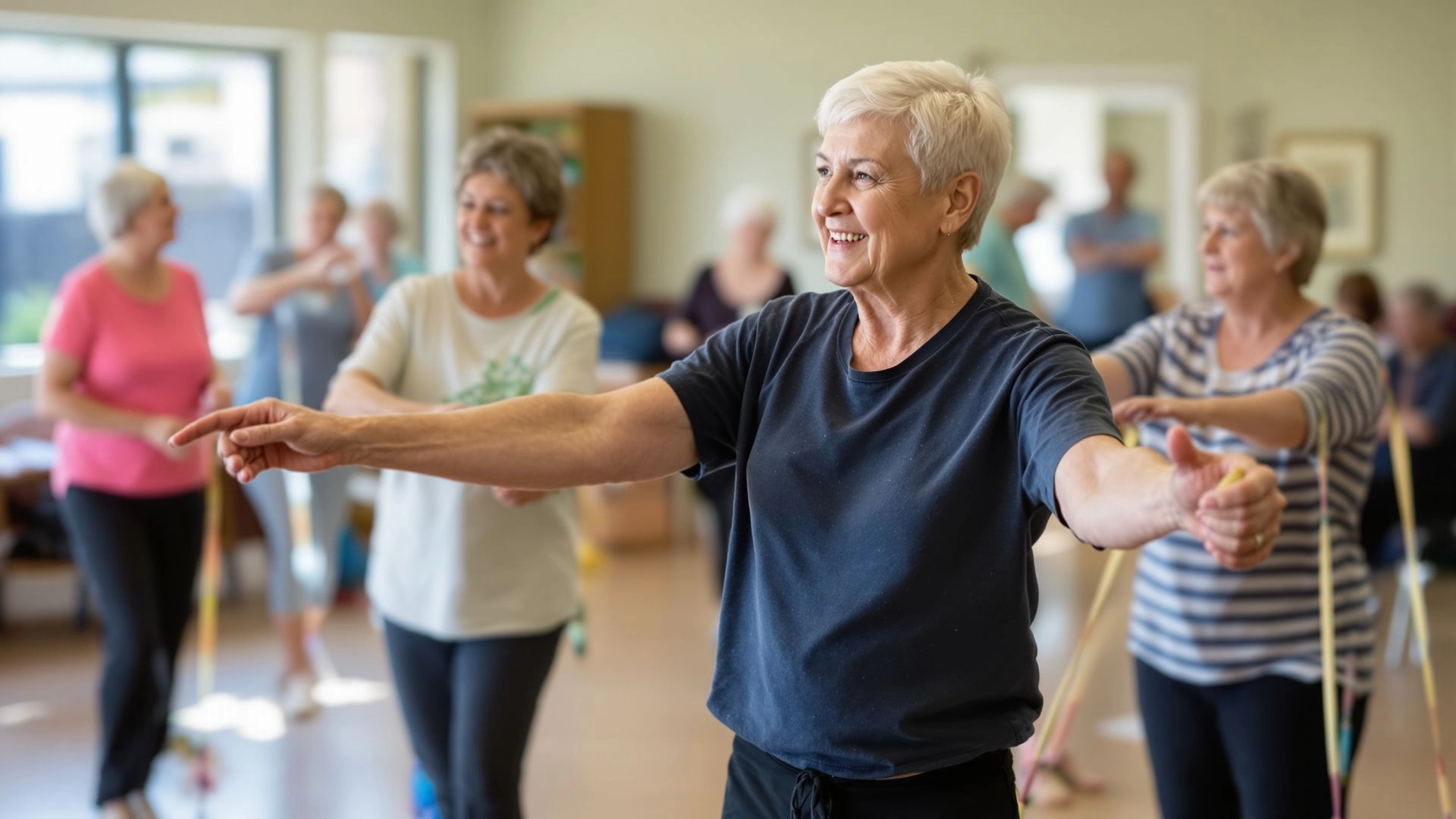
Seniors exercising safely outdoors with gentle guidance and a joyful, healthy atmosphere.

Safe, Effective Exercise for Seniors: Benefits, Types, and How to Start Today

Why staying active matters

  • Stay independent longer by improving balance, strength, and mobility
  • Lower the risk of falls, heart disease, type 2 diabetes, and cognitive decline
  • Ease arthritis symptoms and joint stiffness
  • Improve mood, sleep, and energy
  • Support brain health, memory, and confidence

Doctor consulting elderly woman about safe exercise precautions before starting a fitness plan.

Quick safety check before you start

  • Talk to your clinician if you have heart, lung, or joint conditions; are recovering from surgery; or take medications that affect heart rate or balance.
  • Use the “talk test”: during moderate activity, you can talk but not sing; during vigorous activity, you can only say a few words without pausing for breath.
  • Start low and go slow. Increase time first, then intensity, then complexity.
  • Stop and seek medical advice if you feel chest pain, severe shortness of breath, dizziness, or unusual joint pain.

What counts as exercise? The four pillars

  1. Aerobic (cardio)
    • Goal: 150–300 minutes/week of moderate intensity (e.g., brisk walking, cycling, water aerobics), or 75–150 minutes/week vigorous intensity if you’re already active.
    • Benefits: heart and lung health, endurance, cognitive support, mood.
  2. Strength (muscle and bone)
    • Goal: 2–3 nonconsecutive days/week; 8–12 repetitions for each exercise, 1–3 sets.
    • Examples: resistance bands, light dumbbells, bodyweight (sit-to-stand, wall push-ups), weight machines.
    • Benefits: stronger legs and core for balance, better blood sugar control, reduced osteoporosis risk.
  3. Balance and coordination
    • Goal: at least 3 days/week.
    • Examples: heel-to-toe walk, single-leg stance near support, tai chi, dance, stepping drills.
    • Benefits: fall prevention, confidence walking indoors and outdoors.
  4. Flexibility and mobility
    • Goal: most days/week.
    • Examples: gentle stretching, chair yoga, range-of-motion routines.
    • Benefits: less stiffness, better posture, easier daily movement.
Senior man doing moderate exercise outdoors, maintaining steady breathing.

How hard should exercise feel?

  • Moderate: feels like 5–6 out of 10 effort; breathing faster, can talk in short sentences. You may or may not sweat—and that’s okay.
  • Vigorous: feels like 7–8 out of 10; breathing is deep and quick; only a few words at a time.
  • You do not need to “push to the max” to see benefits. Consistency and proper form matter most.
Seniors following a light exercise routine including walking, stretching, and strength training.

A gentle, senior-friendly starter plan (example week)

  • Monday: 15–20 minutes brisk walk; 10 minutes mobility and gentle stretching.
  • Tuesday: Strength (20–30 minutes): sit-to-stand, wall push-ups, resistance band row, heel raises; finish with 5 minutes balance practice.
  • Wednesday: Low-impact cardio (20–30 minutes): water aerobics, stationary bike, or indoor walking.
  • Thursday: Rest or light activity: gardening, household tasks, or a leisurely walk.
  • Friday: Strength (20–30 minutes); balance (5–10 minutes).
  • Saturday: Group class: tai chi, dance, or chair yoga (30–45 minutes).
  • Sunday: Easy walk (15–20 minutes); stretching (10 minutes). Tip: Gradually add 5 minutes to cardio sessions or 1–2 reps per strength exercise each week.

Overcoming common barriers

  • “I haven’t exercised in years.” Start with 5–10 minutes and add time weekly.
  • “I’m worried about falling.” Begin near a countertop or sturdy chair; prioritize balance drills and use supportive footwear.
  • “My joints hurt.” Choose low-impact options (water aerobics, cycling, chair routines); warm up longer and avoid deep bending if painful.
  • “I get bored.” Try music, a walking buddy, or a class with a social component.
  • “I don’t have equipment.” Use bodyweight, stairs, soup cans, or resistance bands.

Special considerations

  • Arthritis: prioritize gentle warm-ups; shorter, more frequent sessions; avoid high-impact jumps; consider water exercise.
  • Osteoporosis: include weight-bearing walks and strength work; avoid rapid, deep spinal flexion and twisting.
  • Diabetes: check blood sugar as guided; carry a snack; strength + cardio improves glucose control.
  • Heart or lung conditions: follow your clinician’s limits; use the talk test and rate of perceived exertion.
  • Cognitive changes or dementia: group movement therapy (music, simple dance, guided breathing, and light games) can improve mood, social connection, and participation.

Where to exercise

  • At home: chair routines, resistance bands, bodyweight circuits, online senior-friendly videos.
  • Community options: senior centers, YMCAs, parks and recreation classes, walking clubs, mall walking groups.
  • Care settings: adult day health, assisted living, or nursing homes often provide modified group movement sessions.

How to track progress

  • Functional wins: easier sit-to-stand, fewer rest breaks, steadier on uneven ground.
  • Simple measures: daily step count, balance hold times, repetitions completed, minutes active per week.
  • Mood and sleep: note days you feel more energetic, sleep better, or enjoy social time.

Motivation that lasts

  • Set one small, specific goal per week (e.g., walk 10 minutes after breakfast, 4 days this week).
  • Put activities on your calendar and prepare clothes the night before.
  • Celebrate milestones—consistency counts more than intensity.

FAQs

Do I need to sweat for exercise to “count”?
No. Benefits begin at moderate intensity, whether or not you sweat. Aim for a pace that raises your breathing and heart rate comfortably.
Is it safe to exercise with arthritis?
Yes, with the right plan. Low-impact movement reduces stiffness and pain. Start gently and avoid painful ranges.
What if I use a cane or walker?
Many exercises can be done seated or with support. Balance drills can be modified next to a countertop.
How soon will I notice results?
Many people feel more energetic and sleep better within 2–4 weeks; strength and balance gains typically build over 6–12 weeks.
When should I stop and call a clinician?
Chest pain, severe shortness of breath, sudden dizziness, or joint pain that does not improve with rest.